
Showstoppers

Project Editor Emma De Vita goes backstage at the Royal Ballet and Opera in London to find out what it takes to run a programme of renewal projects that will return London’s prestigious cultural institution to the top of its technical game
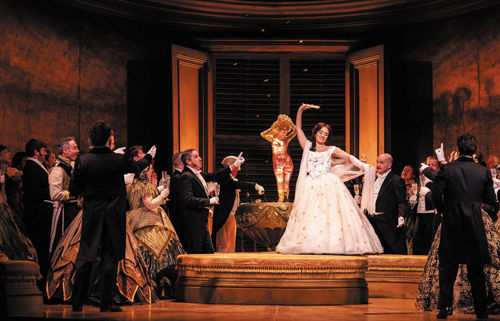 Front of house and back of house present a world of contrasts. I stand at the back of the stage looking out at the empty auditorium of the Royal Ballet and Opera (RBO) – all red velvet, gilt and candelabras – surrounded by staff in hard hats who are busy changing over the scenery for one opera in anticipation for another – La Traviata – which is this evening’s performance. RBO has embarked on a £40m renewal programme covering everything from lighting and machinery to the comms system that keeps everyone and everything where they should be. This critical upgrade of 25-year-old infrastructure is designed to keep ballet dancers leaping and opera stars singing to ever greater heights.
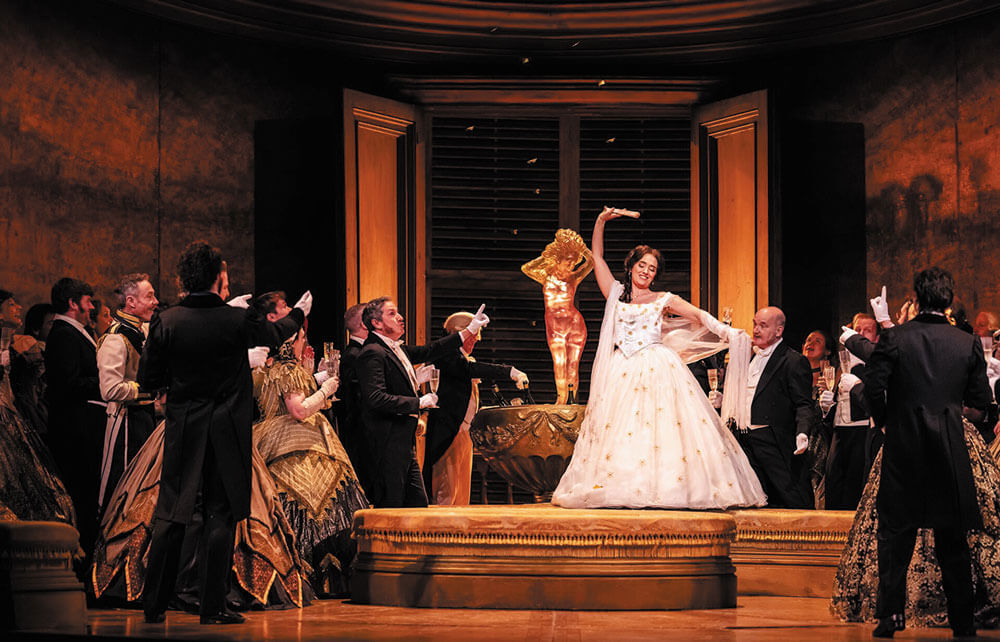 Credit photo
Incorrigible project junkies
As an APM Corporate Partner, RBO takes project management seriously, despite being an unexpected enclave of expertise. After all, it’s not tunnels or railways. The story of RBO’s renewals programme is one of collaboration, open communication and the art of delivering projects to immovable deadlines.
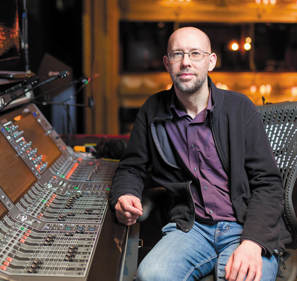 “In a sense, we are the ultimate project junkies,” explains Heather Walker, Chief Operating Officer (COO), likening every production the Royal Ballet Company or Royal Opera Company has put on for hundreds of years to a project: planning years in advance, hiring a creative team, creating the set.
“They go through many stages – called gates – from when something is first conceived all the way through to its first night, and indeed last night, to when it’s being packed onto pallets and then onto a truck to our store in Wales,” Walker explains. The RBO is a repertory theatre, which means productions run concurrently, with around 30 different ballets and operas staged every year.
Walker became involved in RBO with its Open Up project to refurbish and refresh its front-of-house areas, which was completed in 2018. It has since turned its attention to back-of-house infrastructure.
“We decided that if we didn’t start by fixing things on the stage that we could see were beginning to fail, then that was the fastest route to us actually having a problem of continuing our operation,” she says. The five-year, £40m programme is not just about replacing like-for-like, but about future-proofing its tech, building resilience, pushing creative boundaries by giving choreographers and directors new tools, and improving environmental sustainability.
Taking a bird’s-eye view
Walker knows a thing or two about leading programmes at cultural institutions, having spent her career working on them around the world, most recently at London’s Roundhouse. She says that a great programme leader is someone who can “maintain an overview at 30,000 feet of what’s going on; who can absolutely get into the detail and be on-site in a hard hat, looking at a particular issue; and who can communicate to stakeholders. You’ve got to be able to do the macro and the micro.”
To lead means to trust your team – and to be calm and collaborative when an issue arises. Walker says: “I often use this phrase: ‘If it’s a success, it’s their success. If it’s a problem, it’s our problem.’ It’s really important that they feel totally confident in coming to me and going: ‘Can we just have a chat?’ If I have to go to companies, to the Chief Executive, to the board and say something’s happened, they know I will front that – and that I’ve got their back.”
Musa Halimeh is the Technical Estate Renewal Programme Lead, reporting to Walker, and is responsible for everything that contributes to the stage operation, meaning oversight across stage machinery, sound and video broadcast, and stage and auditorium lighting, and coordinating the work of each of the three project managers responsible for these strands of the renewal programme. The technical estate has been in heavy use since its installation in 1999 and had become unreliable. The stage elevators kept getting stuck and the stage lights kept failing.
The aim of the renewals programme is to “leave the opera in a better place”, giving it back the state-of-the-art technology it once enjoyed, and taking it further, not least integrating systems so that there is tracking between machinery, lights, video and sound.
“With these upgrades, we could potentially move towards a virtual stage where we could plot anything with a creative, and once they’re happy, that can happen on stage because it’s just transferring files at that stage,” explains Halimeh.
The show must go on
Halimeh was brought in to manage the upgrade of the power fly system (the motorised bars above the stage used to hang lighting, cloths and elements of the show set). They hang 37m above the stage, and work had to be phased over two-and-a-half years, working around the RBO’s gruelling performance programme. This means containing work to overnight sessions and a three-week block during August when the stage closes for performances. There is zero room for manoeuvre – the show must always go on. What matters more than anything is business continuity. “We don’t want the stage to stop,” says Halimeh.
It’s a lot of pressure to contend with, but as he explains, “The challenge of knowing that, when we take a project on, even when we’re just in the concept phase, we’re going to deliver something new for next season, is exciting. The journey between now and then is going to be tough, but it’s achievable.”
The job, he says, requires flexibility and the ability to learn quickly about different aspects of theatre: “understanding what’s important to people, why you can’t interrupt their operation and the impact projects have”. It means, as a project manager, creating open and collaborative communication with everyone involved – often people who have worked there for a long time and feel a sense of ownership over the place.
With such a short window for access to the stage over the summer, aside from achieving extreme clarity on every aspect of a programme, it makes for projects that are heavily front-loaded (“It’s also called derisking, right?” Halimeh quips). The earlier you get rid of the risk, the better. “That’s literally the only way we can work here.”
He says it’s about investing the time and being brave enough to call something off if it isn’t right: “Yes, we’ve got deadlines, but our main objective is to keep the show going.” Project schedules align with the stage schedule. It calls for a very good risk register, he says, and getting the end users involved in the mitigation: “It’s really helpful, because it calms them down.”
Clear communication
The step up from project manager to programme manager has meant Halimeh has learnt to “try not to deliver the project yourself. I found that quite difficult.” It’s about oversight, not ownership, of a project and seeing the bigger picture. Clear communication is critical, not only with stakeholders, but with the project team itself, where weekly kick-off meetings are a useful catchup and collaboration opportunity. He says he benefits from reporting to a COO who has a strong project background herself. “She’s very understanding,” he says. “As a programme manager, you want to have that support.”
It’s evident that Halimeh enjoys his job, despite the evenings, nights and weekends he needs to work. “Once you put a show on, and the audience are loving it, you get such a buzz.” He reads the daily show reports religiously.
“It’s really important to know that anything we’ve upgraded is working and there haven’t been any problems, and that it’s given the audience what they’ve come to see. That’s your motivation when you are doing the late nights, trying to get everything up and running. If the stage elevators don’t work, there’s no show. If the lighting rig doesn’t work, there’s no show. If the comms go down, there’s no show. They’re all showstoppers. I think what we really need to be proud of is the methodology and that we’ve delivered it without interruption – we’ve gone from old to new.”
Shining a light
George Townsend is in charge of the renewal of the stage and auditorium lighting. The first project was to upgrade the 960 downlights and candelabras (which are on for 14 hours a day) in the Grade I-listed auditorium from tungsten to LED. High power consumption and the quality of tungsten lamps, in decline since the pandemic, led the team to make the switch. After extensive investigation and design, a couple of the downlights and candelabras were switched to LED without anyone being told.
“There were lots of collaborative meetings and prototype sessions, and then we fed that back to the stakeholders here. We had sessions where we said, ‘One of these candles is LED; can you tell me which one it is?’” Townsend says with a smile. No one could.
Change can be hard. “If you’ve got someone who’s been working in the organisation for 20 years and they know how something works, and then you say, ‘I’m going to bring in a new thing,’ some people can be a bit fearful of that. So we have to put in lots of sessions where we’re explaining what we’re going to be doing and why, but also training them on the new systems before they come in. That was really important for us,” he says.
Townsend’s second project has been to upgrade the permanent lighting rig above the stage, with around 1,000 lights utilised across productions. The old tungsten-lit rig had surpassed its lifespan. For every ballet or opera, visualising lighting in a virtual space was de rigueur – in 2023, RBO had created a new lighting control visualisation space, where the lighting designer and directors can see a 3D rendering of the opera house on a screen (the stage area had been scanned by LiDAR to make it dimensionally perfect).
“We do all the backbone work in the virtual space, and then when we come to the stage, it’s finessing stuff,” says Townsend. Replacing the production lighting with the latest technology means that what’s on stage will accurately replicate what is created in the 3D space.
To date, the stage lighting battens – the big metal structures that house the permanent rig – have been replaced to cope with the far heavier modern lights. RBO worked with German manufacturer HOF to design custom structures that could be wheeled into the building and installed in four weeks over the summer, ready to go straight into the next season. “When the first show hits, the stage has to work,” says Townsend. So far, so good.
Speaking the lingo
Adam Lindsay is a career project manager, having started out as a graduate trainee at the BBC, then moving to Siemens before taking the job at RBO 18 months ago – he is the first professional project manager the team has hired. He is responsible for replacing the production communication system, which is used by up to 150 people on stage to communicate, whether that’s the teams for lighting, sound, stage (who move scenery around) or the flies (who look after anything that’s raised in the air – scenery, curtains or even performers). The old radio system was starting to fail, so it was Lindsay’s job to design, build and migrate the entire system over five weeks in the summer of 2025.
“That was the burning platform, because it absolutely had to be done urgently,” he says. “It was a significant technical installation with a lot of network signal processing communications equipment needing to be installed. It affected a huge number of people,” he says, from stage teams and lighting operatives to the costumes department and wigs and make-up. “Ultimately, when the show is ready to go on, everything needs to be in the right place and happening at the right time.”
Bringing professional rigour
As an experienced project professional, Lindsay sees that there is an awareness and acceptance at RBO that project management is an important discipline and that it brings benefits. “At the very senior level, that’s quite well understood, and it is great to see that project managers are brought in to bring that discipline and experience. But as is often the case, as a project manager, unless you can speak the same language as the people you are delivering projects to, they don’t necessarily see the benefits of it.”
It’s a particular kind of culture. “People here tend to be risk-averse. The schedule is so intense that people need to be able to turn up on time, and get on with their job, with no delay. Keeping those stakeholders happy is really important,” says Lindsay. “With project management, the theory, the discipline and the training are great, but ultimately it’s about getting people to effect change and achieve things. The people skills are so important here.”
Telling people what’s going on in their own language is critical, Lindsay explains: “If I’d gone into meetings and started talking about dependencies, value analysis and project mandates, and all those sorts of things, I would’ve very quickly found people glazing over, but I tried to deliver things in a way that they understood. It was actually a challenge for me, because I had to learn a new language to work here – even simple things like stage direction.”
Understanding the nature of the projects you’re delivering is important, says Lindsay, but you don’t need to be an expert. “I knew very little about opera before I started and I sometimes wonder if that can be a benefit because it can give you that detachment from being overwhelmed by everything you see because you’re such a fan of it. But I still get a buzz from coming into the building every morning and walking into that auditorium.”
The only way is up
Karl Erickson is project manager for the renewal of the stage machinery at RBO. “It’s a venue that’s not like any other place – it’s got an outrageous amount of machinery in it,” he says with glee. “It’s important for our shows, but it’s even more important for our changeovers because we usually have to do a changeover [between sets] twice a day, and then they do a show that evening. And that’s most days of the year, usually six days a week.”
The first project he worked on was updating the stage elevators. The stage floor comprises six elevators next to each other. It’s a moving floor and has a mezzanine level underneath, which you can walk in at the level below, that travels up and down with the elevator. They are used for stage effects – performers coming up from below stage. Most of the elevators can drop down by four to six metres. With La Traviata, they are used for a staircase and people coming up from below; in The Nutcracker, the huge Christmas tree magically ‘grows’ through the stage floor.
“The biggest problem with the stage elevators versus any of the other projects we’re doing is that they are the floor of the theatre, so if you’re doing stuff with it, nobody can be stood there – if you put them all down, that’s a giant hole,” he says. “There was no way to not impact other people.” Erickson is a big fan of RAID (risks, assumptions, issues and decisions) as a project management tool: “I really like that a lot, especially when you’re talking to your stakeholders because the thing that you’re really trying to do on a frequent basis is to solve issues; you’re always trying to mitigate risks.”
With the project mostly complete, directors are once again considering using the (now reliable) elevators for live moves during a production. Erickson gets a kick from knowing the new technology will help push the creative boundaries of what’s shown on stage. Largely due to complete in 2027, the stage renewals programme will showcase not only what directors, choreographers, ballet dancers and opera singers can really achieve on stage if they are given the right tools, but how professional project management is integral to helping them reach these heady heights while keeping the show on the road.
Listen to Emma’s behind-the-scenes trip on the APM Podcast, where you’ll also find an interview with RBO COO Heather Walker – available on Spotify, Apple Podcasts and more
This is a Project article for paying members only. Browse more articles here.

Emma De Vita is editor of Project, the official magazine exclusive for paying members.
0 comments
Log in to post a comment, or create an account if you don't have one already.